 Give a Gift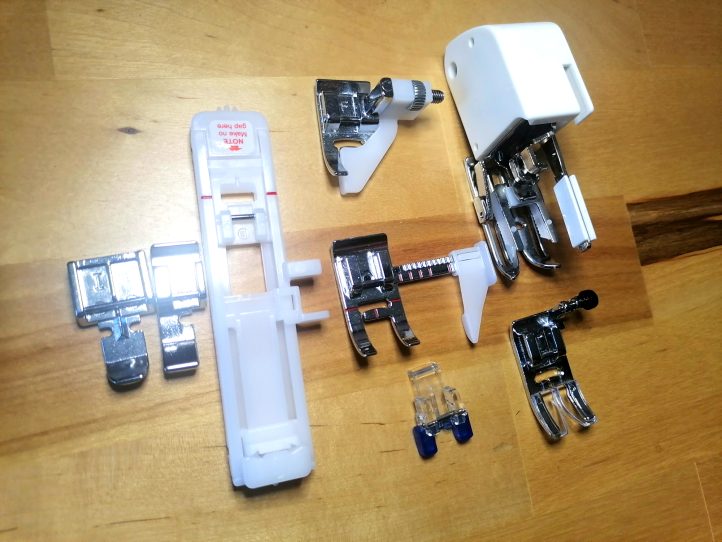
All photos in this article are provided by the designer.
If you’ve ever looked at your sewing machine accessories and wondered what on earth half those little feet are for, you’re not alone. A presser foot may look small, but it’s one of the most important parts of your machine. It gently holds the fabric in place while you sew, keeping everything smooth and even.
While the standard presser foot handles most everyday stitching, there’s a whole world of specialty feet designed to make your sewing faster, neater, and a whole lot easier. From zippers to quilting, ruffles to buttonholes, each foot has its own unique superpower. Some come with your machine, while others can be purchased separately — and once you start using them, you’ll wonder how you ever managed without them.
Let’s dive in and explore the world of presser feet!
Essential Everyday Feet
STANDARD (ALL-PURPOSE) FOOT
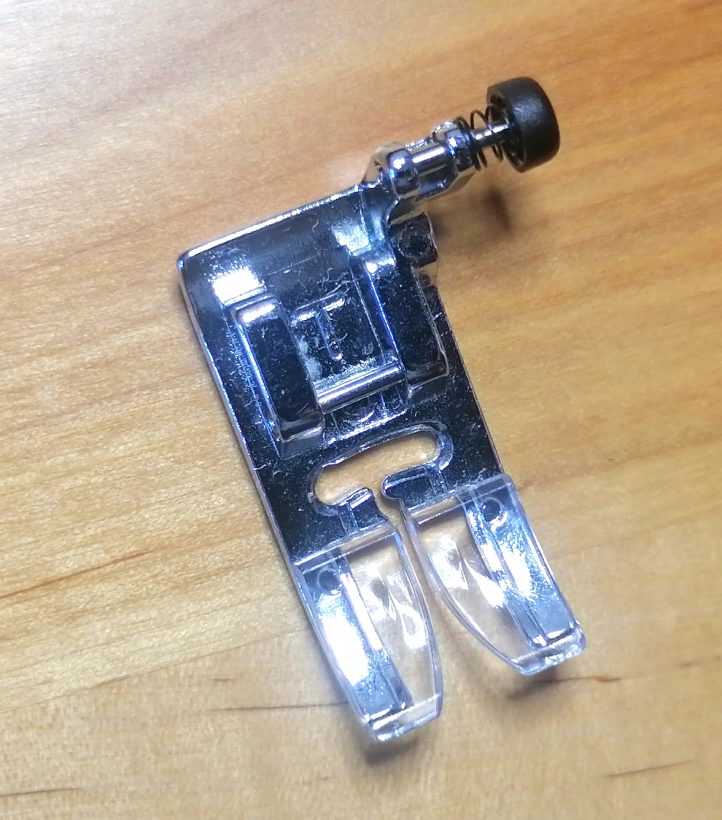
The standard foot is your machine’s workhorse. It handles most fabrics and stitches, making it the one you’ll use most often. It’s ideal for straight and zigzag stitching, and it ensures the fabric feeds smoothly under the needle.
ZIPPER FOOT
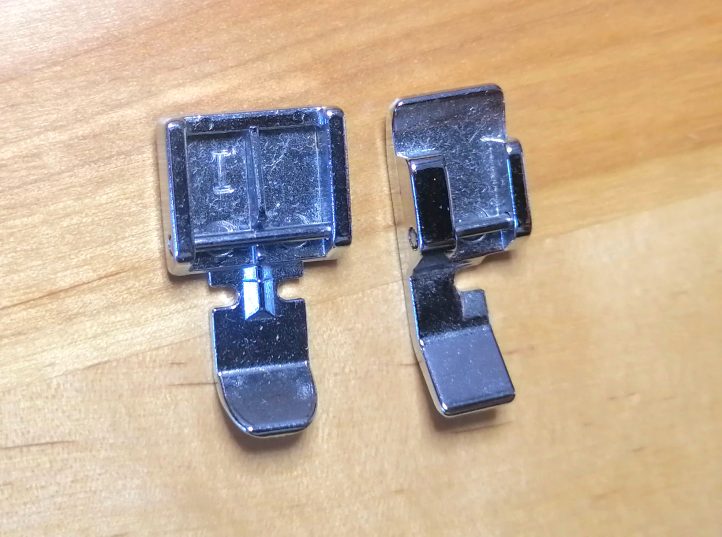
A zipper foot lets you sew neatly along the edge of zippers, piping, or cording without the bulk of the regular foot getting in the way. You can attach it to either side of the needle, depending on which edge you’re sewing.
BUTTONHOLE FOOT
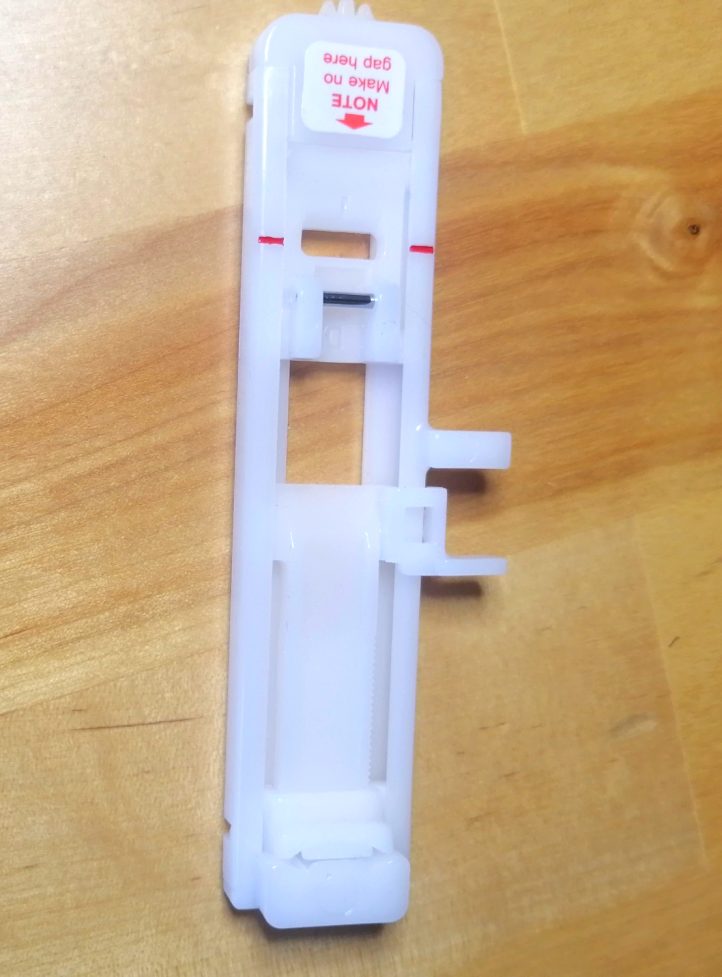
No need to fear buttonholes! This foot makes creating them simple and consistent. Most modern machines automatically size the buttonhole to your chosen button, giving you neat, professional results every time.
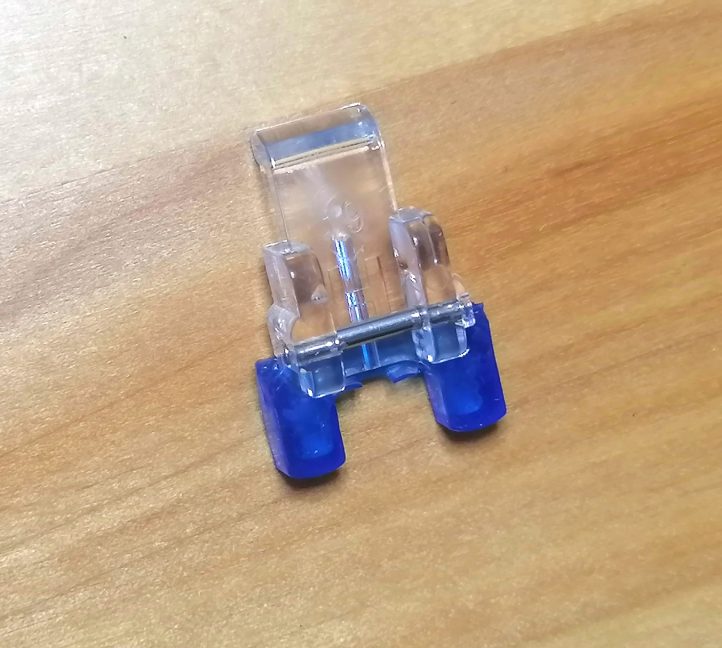
Quilting Feet
WALKING FOOT (EVEN FEED FOOT)
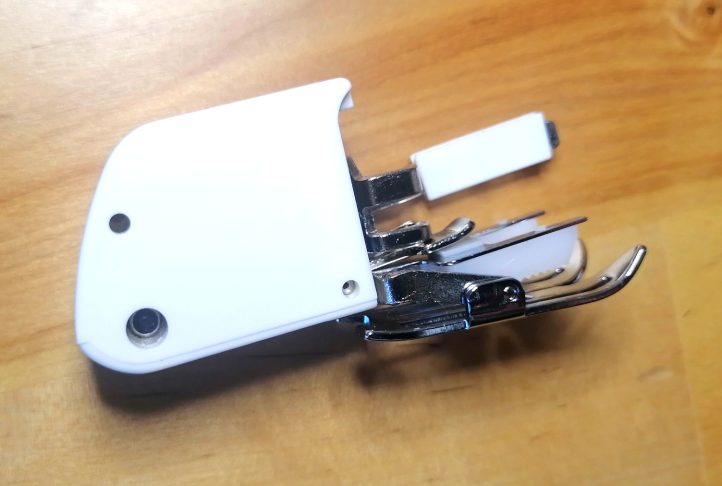
This foot has built-in feed dogs that move the top and bottom fabric layers at the same rate, preventing shifting or puckering. It’s perfect for quilting, matching plaids, or sewing multiple layers.
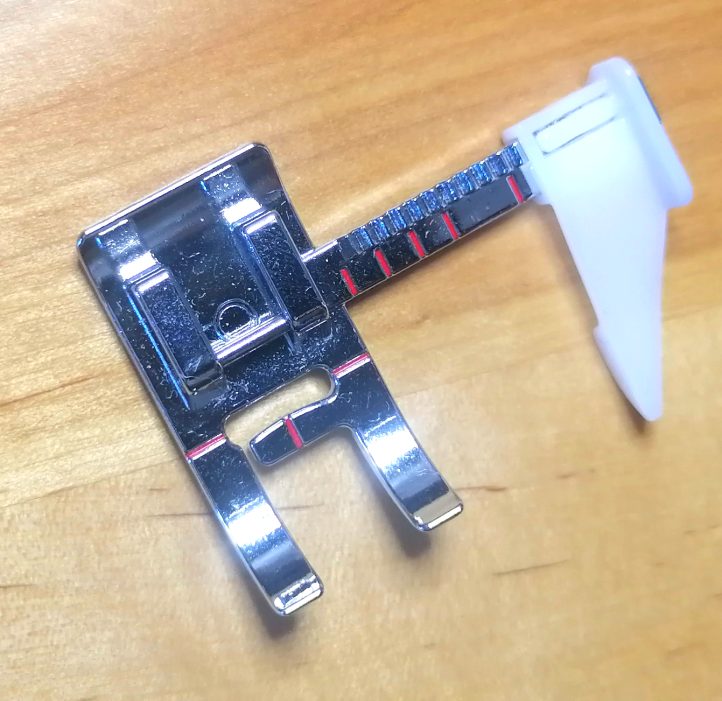
1/4-INCH FOOT
Precision is key in quilting, and this foot helps you achieve that perfect quarter-inch seam allowance for accurate piecing. Many versions also include a handy guide for staying straight.
FREE-MOTION (OR DARNING) FOOT
Ideal for quilting or embroidery, this foot lets you move the fabric freely in any direction. Lower your machine’s feed dogs, drop the presser foot, and let your creativity flow with beautiful free-motion stitches.
Garment Sewing Feet
OVERCAST (OR OVEREDGE) FOOT
Keep fraying fabrics under control with this foot, which mimics a serger by wrapping thread around the fabric’s raw edge. It’s perfect for finishing seams neatly when you don’t have an overlocker.
BLIND HEM FOOT
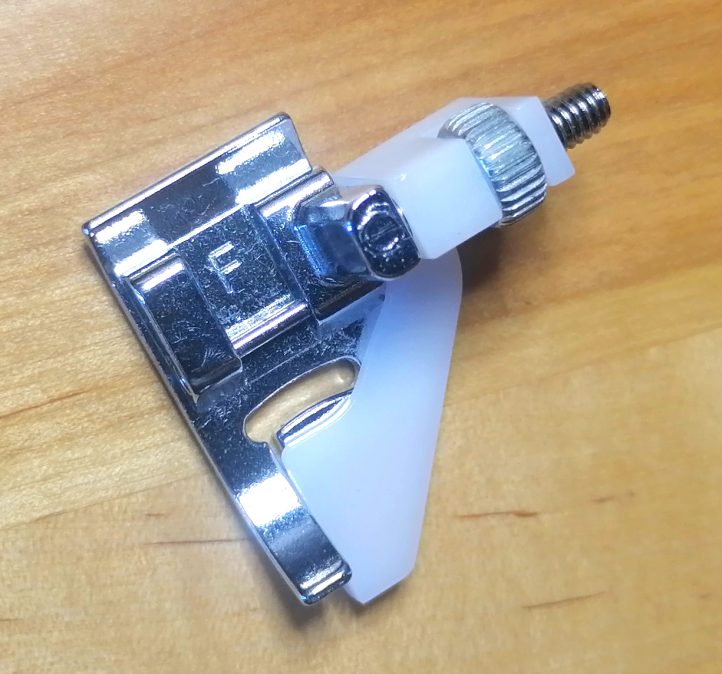
Want to hem your garments invisibly? This foot helps you fold and stitch the hem so the stitches are barely visible from the right side — ideal for trousers, skirts, and curtains. It’s also useful for edge stitching.
ROLLED HEM FOOT
This clever foot rolls the edge of lightweight fabrics, like silk or chiffon, into a narrow, double-folded hem as you sew. It’s a game-changer for achieving delicate, professional finishes on sheer fabrics.
Creative and Specialty Feet
GATHERING (OR RUFFLER) FOOT
Add ruffles or gentle gathers with ease! The gathering foot creates even, consistent gathers as you sew — perfect for dresses, cushions, and home décor.
TEFLON FOOT
This non-stick foot glides smoothly over tricky materials like vinyl, leather, faux leather, or laminated fabrics that might otherwise stick to a metal foot.
CORDING OR PIPING FOOT
Want to add a decorative touch? This foot is designed to stitch neatly over cords or piping, giving your projects a crisp, polished finish—especially useful for upholstery or cushion covers.
Tips for Choosing and Using Presser Feet
- Snap-on or screw-on? Most modern machines use snap-on feet for convenience, while older models may require screw-on types. Check your machine manual to confirm which style fits your model.
- Low shank or high shank? This refers to the distance between the presser foot screw and the machine base. Most domestic machines are low shank, but it’s always worth checking before buying additional feet.
- Compatibility matters! Always make sure new presser feet are designed for your machine’s brand or model. Universal feet can work, but brand-specific ones often perform best.
- Practice first. Practicing on scrap fabric before using a new foot builds confidence and helps you get the best results on your final project.
- Stay organized. Store your presser feet in a labeled box or organizer so you can quickly find the one you need. Bonus: It keeps your sewing space tidy, too!
Bonus: Printable Presser Foot Guide
Keep It Handy! Download our printable presser foot guide — a quick-reference chart featuring photos and descriptions of the most common sewing machine feet. Print it out and keep it near your machine so you’ll always know which foot to grab for every stitch and fabric type. Stylish, practical, and perfect for your sewing space!
Sewing machine feet might be tiny tools, but they make a big difference in your sewing adventures. Choosing the right foot for each project can help you achieve neater stitches, polished finishes, and inspire you to experiment with new techniques.
So, the next time you sit down at your machine, don’t just grab the usual foot. Take a moment to explore the possibilities — you might just discover a new favorite right at your fingertips (or rather, your feet!).